
The significance of the project comes from the integration of Egyptian real cases with a new way of thinking to get new solutions from the collaboration of different disciplinarians and different scientific backgrounds. We have spent nearly ten years in both architectural education and architectural research that encourage us to participate in this project. For such opportunity, there is a three objectives from this stay:
Develop Research Studies and PhD Dissertations, As PhD students in the field of urban sustainability, the project topic is in the core of our research interest. We finished the theoretical part of PhD and searched for applying methodologies to cope with the Egyptian urban challenges. The stay was a good opportunity to develop our research studies by conducting joint research with international entities and especially with TU-Berlin. We had the opportunity to attend a lot of academic events, visited many sites and participated in different events which develop our research studies.
Participate in Design Studios & Conducting New Teaching Methods,
It was a new experience to see ways of teaching courses closely in a new learning environment. Benefit from the qualified professors and laboratories equipment. Working in a team and supporting students, transferring their concepts to real projects with serious studies.
Development of New Architectural Curricula ideas for Mansoura University
Over the course of three years, urban planning, urban design and housing curricula have been studied by our students, and as a part of the internal committee for Accreditation and quality assurance of higher institutions conducting with course specs. We developed some teaching methods internally, and modified some of the courses orientations.
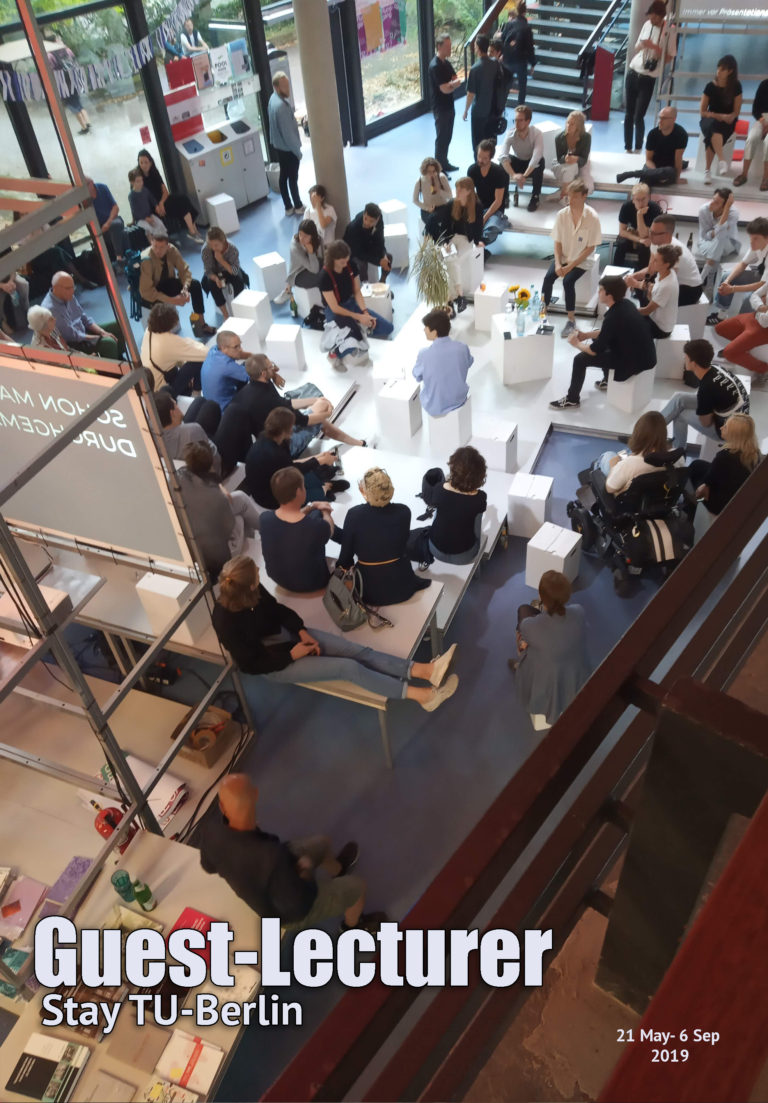
Some Activities during the Stay in Berlin:
Kick-off Meeting of Delta-TU partnership project 21:23 May 2019 : Just after arriving to Berlin to start a mission of (Guest Lecturer) for 4 months, Both candidates (A. khalil and M. ElDabosy) joined the project team in the kickoff meeting, Various discussions took place with the project partners about the upcoming events of 2019, and how to make the most of the project program. Also, arranged the stay schedule with Prof. Steffan, and Prof. Roswag, to attend sessions in their classes as assistants
Design Studio Düppel Museum for summer semester 2019 : Participation in the design studio in the chair of Natural Building Lab NBL, Prof. Eike Roswag-Klinge Institut für Architektur. (https://www.nbl.berlin/RE-Duppel). Students work groups were contacted to follow up on the project stages, starting with society communication and knowing their requirements regarding the project site till the final project.
Stadtwerk; Natural Building Lab Ackerstraße for summer semester 2019 :
Modelling the new lab furnishing using natural materials
Projects Presentation
3rd Wits–TUB Urban Summer School; 24th:28th June 2019
The summer school focused on many significant issues recently uprising as urban challenges such as developing an understanding of the struggles, positions and perspectives behind what can be called “The Berlin Housing Question”, and reflections across Global South and North and with a focus on Berlin and sub-Saharan African cities.Through documenting, studying, visualizing, analyzing, comparing, and evaluating, with participants from Urban Management, Architecture, Urban Planning backgrounds and TU Berlin Urban Management students – we developed our own conclusions, ideas, and definitions in close collaboration with the local practice partners, local lecturers and experts.
Five days of interactive working with a wonderful team from different backgrounds and doing many activities (https://www.wits.ac.za/wits-tub-urban-lab/summer-school/). The workshop starts with an open presentation about the WITS-TUB Urban Lab cooperation from TUB and WITS staff and Intro practical exercise, co-productive data/ info gathering and a guided city tour inBerlin-Kreuzberg. In Day 2: Intro lectures, inputs, conceptual discussion on concepts and theories about housing, and then we formed working groups, SDG exercise, review of learned concepts and theories, preparation for field site trips and fieldwork. Day 3: we visited Alltag am Vollgut (sustainability collective) collaborative work with local experts and visited Stadt von Unten (local initiative for municipalization of housing and land) collaborative work with local experts. Day 4: student working groups meet individually with local experts to do/finalize the SDG exercise, incl. innovative documentation methods, interviews, visualizations, fieldwork, etc.Group work on housing themes and SDGs, and summarizing work, approach, outcomes on posters and preparing for Fridays group presentations. Day 5: we visited Haus der Statistik initiative, Berlin-Mitte and presented our working groups’ findings, based on the posters and discussion
Prototyping, Garden Schlachtensee : Participation in cultural-social activities with local and international students in the Studentendorf Schlachtensee as a weekly meeting to discuss, develop and implement a prototype for softscape design, planting types and garden appearance. It was a good opportunity to know about different cultures through the designing and implementation phases of this garden.
Habitat Unit Ph.D. Colloquium:
3rd of June, from Ph.D. students; MinJi Kim: Shared Heritage. Shared Heritage Activism? Learning from activist approaches to urban heritage conflicts across the Indian Ocean region, And Zonke Mkhomazi: Conflicting Rationalities: Negotiating A Process of Inclusion Between The Minibus Taxi Industry and The BRT in Ekurhuleni, South Africa.
2nd of July from Ph.D. students; Jakub Galuszka: Co-production- between service delivery strategy and urban governance transformation approach. And Ayham Dalal: From Emergency Shelters to Dwellings: On the Role of Refugees as Architects and the Construction of Dwellings in Zaatari Camp, Jordan.