
2nd of Oct. 2019
The City Science Summit 2019
The City Science Summit 2019
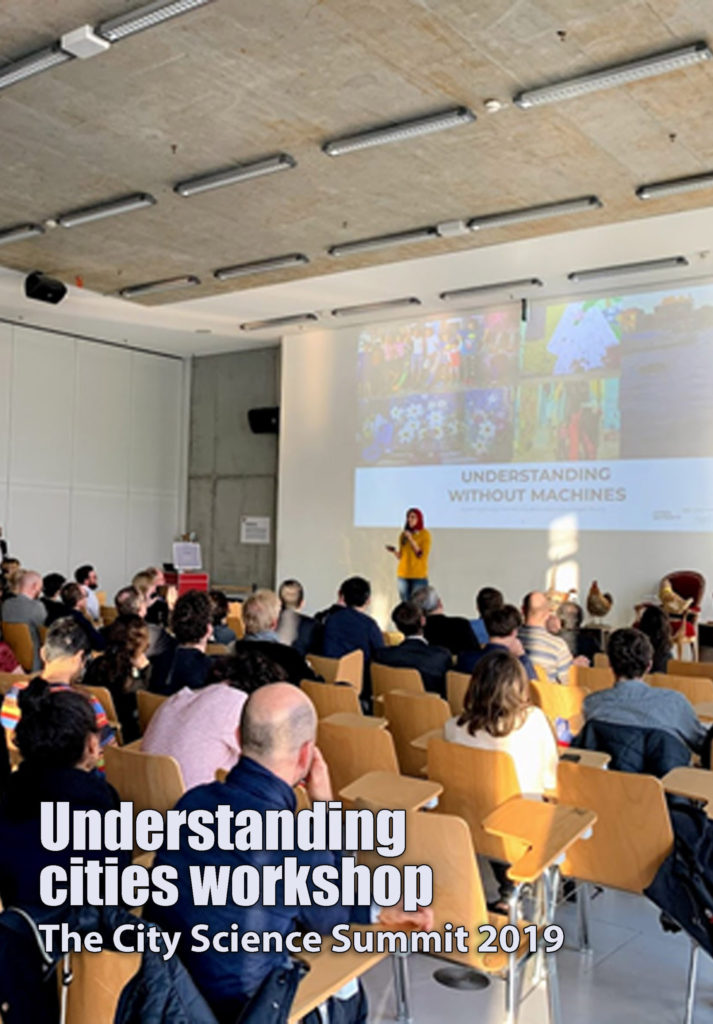
Understanding cities without machines was the theme that put together the new technologies proposed by city science lab and practiced in Hamburg along with the Egyptian context focusing on cities of the Delta region and represented by the three academic organizations, Mansoura, Tanta and Kafrelsheikh universities along with University College London. The city science summit 2019 presented several provocative themes. Cities without machines addressed community’s interaction with computer vision applications, where people control new technologies and not the vise versa. In this sense, digital interfaces act as amplifiers for the role of local communities. It helps people to take part in the decision making process and determining the future of their cities through advanced tools for urban modeling.
The workshop started with a speech for Holger prang and Dr. Moemen Al-Soudani explaining the cooperative project to the attendees. Discussing the main aim of introducing new technologies based on digital interfaces like the city-scope tool to facilitate the interaction between local communities and stakeholders along with practitioners and governmental bodies in Delta cities. Afterword, Dr. Maged Zagow from Tanta University presented the main challenges faced by cities of the Delta-region. Tackling rapid urbanization, excessive demands for social housing projects, and the spread of different forms of housing informality. Besides problems concerns infrastructural deterioration and transportation challenges. Successively Eng. Mohamed Ibrahim from university college London addressed the lack of data for slum areas and informal settlements. He introduced a model for slum prediction. It identifies informal settlements based on satellite image classification. The model represents an attempt to offer planners and policy-makers a pragmatic tool that can help in identifying informality in cities.
The workshop started with a speech for Holger prang and Dr. Moemen Al-Soudani explaining the cooperative project to the attendees. Discussing the main aim of introducing new technologies based on digital interfaces like the city-scope tool to facilitate the interaction between local communities and stakeholders along with practitioners and governmental bodies in Delta cities. Afterword, Dr. Maged Zagow from Tanta University presented the main challenges faced by cities of the Delta-region. Tackling rapid urbanization, excessive demands for social housing projects, and the spread of different forms of housing informality. Besides problems concerns infrastructural deterioration and transportation challenges. Successively Eng. Mohamed Ibrahim from university college London addressed the lack of data for slum areas and informal settlements. He introduced a model for slum prediction. It identifies informal settlements based on satellite image classification. The model represents an attempt to offer planners and policy-makers a pragmatic tool that can help in identifying informality in cities.
The workshop aimed to have a feed back from the attendees of different disciplines and backgrounds. That’s why four interactive sessions and round tables took place to discuss more about the opportunities and challenges faced by delta cities in a collaborative method. These sessions presented opportunities for future research projects, and possible academic exchanges.
Each session was led by one of the Egyptian assistant professors. Dr. Moemen Al-Soudani from Mansoura University discussed the crucial need for a better collaboration between academic organizations and governmental bodies through formal and informal assemblies gathering community leaders, investors and students. This partnership from one hand will enable the governmental bodies and administrations to better understand the community needs and in the same time introduce their aspirations for the future city planning. From the other hand the academia acts as a facilitator for having a consensus between government and society. As it could offer scientific methods and technological tools to better manage the social demands according to the available resources. In this sense the city scope interface could be one of the tools offered to solve this topic. Dr. Moemen Al-Soudani also addressed the importance of encouraging further funding opportunities in order to collaborate with international academic partners to obtain a wider scientific community.
The second session was led by dr. Nanees Alsayed and Eng. Mokhtar Akl from Mansoura University who addressed the topic of smart cities and the management of big data. It focused on the problems of Egyptian cities due to the lack of data in what concerns urban, mobility, infrastructure and traffic. They constructed a comparison between European cities managing the availability of data and the organizations that could help in facilitating this big data. To help in better understanding problems and offering suitable solutions, also he addressed al Mansoura city and how it could be changed into smart cities. How to use this database in making a semantic 3d city Model for al Mansoura offering data and information and connected to sensors for offering real time data. Where we can calculate environmental studies thermal comfort, traffic concessions to study all layers of city, like using city engine soft wares or others.
The Third session was led by Eng. Mohamed Ibrahim from university College London. He addressed the lack of data for slum areas or informal settlements for the delta cities. The session managed a dialogue between its attendees concerning how the slum prediction model would offer potential solutions for future planning visions. It is capable to identify methods, tools and techniques for controlling as well as upgrading informal settlements through satellite image classification. The sessions aimed to introduce a pragmatic method based on data prediction, since the lack of data is one of the main challenges faced by planners and policy-makers in identifying informality in the delta regions cities.
The fourth and last session was led by Dr. Doaa Salaheldin Ismail from kafrelsheikh university. She addressed the challenges of rapid urbanization in the villages of the delta region, especially in kafrelsheikh governorate, which holds distinguishable historical, environmental or geographical values. The session introduced the case of Burj al Burullus fishermen village along al Burullus Lake. It is suffering rapid urbanization, causing a gradual violation over the wetlands. The village is growing in its population and in process of transformation to become a city, where governmental organizations are offering the possibility of sharing the vision of the future city. The session presented these challenges and regulated discussions about how to share consensus between the involved stakeholders. The discussion referred that social participation is a necessity in order to balance the needs of the local community and the future urban planning visions. Using 3D modeling, augmented reality and digital interfaces would promote a productive communication climate, where decisions could be taken collaboratively. More over, the use of artificial intelligence would increase the awareness regarding the environmental and historical values of the lake between the locals, especially in a community with an active majority of children and women.
The outcomes of the sessions were presented in charts, diagrams, sketches and keywords which helped in elaborating a scientific methods for problem solving while generating potential solutions for cities and villages of delta regions.
The workshop was concluded by a final presentation organized by Holger Prang from the city science lab and dr. Doaa Salaheldin Ismail from Kafrelsheikh University. It pointed out to the main discussions, arguments and topics developed through a three hours workshop.
Each session was led by one of the Egyptian assistant professors. Dr. Moemen Al-Soudani from Mansoura University discussed the crucial need for a better collaboration between academic organizations and governmental bodies through formal and informal assemblies gathering community leaders, investors and students. This partnership from one hand will enable the governmental bodies and administrations to better understand the community needs and in the same time introduce their aspirations for the future city planning. From the other hand the academia acts as a facilitator for having a consensus between government and society. As it could offer scientific methods and technological tools to better manage the social demands according to the available resources. In this sense the city scope interface could be one of the tools offered to solve this topic. Dr. Moemen Al-Soudani also addressed the importance of encouraging further funding opportunities in order to collaborate with international academic partners to obtain a wider scientific community.
The second session was led by dr. Nanees Alsayed and Eng. Mokhtar Akl from Mansoura University who addressed the topic of smart cities and the management of big data. It focused on the problems of Egyptian cities due to the lack of data in what concerns urban, mobility, infrastructure and traffic. They constructed a comparison between European cities managing the availability of data and the organizations that could help in facilitating this big data. To help in better understanding problems and offering suitable solutions, also he addressed al Mansoura city and how it could be changed into smart cities. How to use this database in making a semantic 3d city Model for al Mansoura offering data and information and connected to sensors for offering real time data. Where we can calculate environmental studies thermal comfort, traffic concessions to study all layers of city, like using city engine soft wares or others.
The Third session was led by Eng. Mohamed Ibrahim from university College London. He addressed the lack of data for slum areas or informal settlements for the delta cities. The session managed a dialogue between its attendees concerning how the slum prediction model would offer potential solutions for future planning visions. It is capable to identify methods, tools and techniques for controlling as well as upgrading informal settlements through satellite image classification. The sessions aimed to introduce a pragmatic method based on data prediction, since the lack of data is one of the main challenges faced by planners and policy-makers in identifying informality in the delta regions cities.
The fourth and last session was led by Dr. Doaa Salaheldin Ismail from kafrelsheikh university. She addressed the challenges of rapid urbanization in the villages of the delta region, especially in kafrelsheikh governorate, which holds distinguishable historical, environmental or geographical values. The session introduced the case of Burj al Burullus fishermen village along al Burullus Lake. It is suffering rapid urbanization, causing a gradual violation over the wetlands. The village is growing in its population and in process of transformation to become a city, where governmental organizations are offering the possibility of sharing the vision of the future city. The session presented these challenges and regulated discussions about how to share consensus between the involved stakeholders. The discussion referred that social participation is a necessity in order to balance the needs of the local community and the future urban planning visions. Using 3D modeling, augmented reality and digital interfaces would promote a productive communication climate, where decisions could be taken collaboratively. More over, the use of artificial intelligence would increase the awareness regarding the environmental and historical values of the lake between the locals, especially in a community with an active majority of children and women.
The outcomes of the sessions were presented in charts, diagrams, sketches and keywords which helped in elaborating a scientific methods for problem solving while generating potential solutions for cities and villages of delta regions.
The workshop was concluded by a final presentation organized by Holger Prang from the city science lab and dr. Doaa Salaheldin Ismail from Kafrelsheikh University. It pointed out to the main discussions, arguments and topics developed through a three hours workshop.